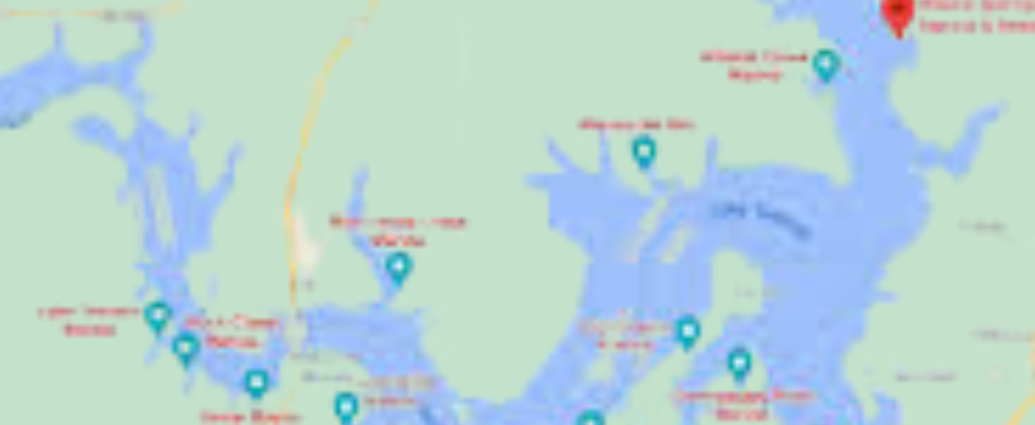
If you’ve ever driven north from Dallas and spotted that massive stretch of shimmering blue water straddling the Texas-Oklahoma border, your first thought probably was: just how big is this thing? The answer is a lot bigger than most people expect. Lake Texoma isn’t just a regional lake — it’s one of the largest reservoirs in the entire United States, and its size is a huge part of why millions of people make the trip there every year.
Let’s break down everything: the surface area, depth, shoreline mileage, how the lake is split between the two states, and why all of that actually matters for your visit.
Read More: Innovation News DualMedia: Your Complete Guide to Hi-Tech Innovation Coverage in 2026
The Quick Answer: How Big Is Lake Texoma?
Lake Texoma covers approximately 89,000 surface acres — that’s about 139 square miles of open water. To put it in perspective, that’s larger than the entire city of Orlando, Florida. The lake stretches across the Red River basin, straddling the Oklahoma-Texas state line, and is fed by both the Red River from the west and the Washita River from the north.
Here’s a quick-reference breakdown of the key numbers:
- Surface area: ~89,000 acres (approximately 139 square miles)
- Shoreline: 580 miles
- Maximum depth: 110 feet (near Denison Dam)
- Average depth: approximately 39.9 feet
- Conservation capacity: approximately 2,525,568 acre-feet
- Flood-control volume: approximately 5,194,163 acre-feet
- Watershed: 39,719 square miles covering southwestern Oklahoma, north-central Texas, parts of the Texas Panhandle, and eastern New Mexico
- Year impounded: 1944
- Annual visitors: approximately 6 million
Those numbers earn it a serious ranking: Lake Texoma is the 12th largest reservoir in the United States and the largest lake in the U.S. Army Corps of Engineers’ Tulsa District.
How Big Is Lake Texoma in Acres?
The surface acreage of Lake Texoma is where most people start — and for good reason. At roughly 89,000 acres, it’s a genuinely massive body of water. Some official sources cite figures that range between 74,686 and 91,200 acres depending on the water level, measurement method, and time of year. The conservation pool elevation fluctuates between 615 and 619 feet above mean sea level annually, which naturally shifts the surface area.
The Texas Water Development Board’s 2002 survey recorded a surface area of 74,686 acres at an elevation of 617 feet above mean sea level. When the lake climbs toward flood pool elevation of 640 feet, the total designed storage capacity reaches approximately 5.3 million acre-feet. The lake has only filled to full capacity three times in its recorded history: June 1966, May 1990, and July 2007.
So if someone asks how big Lake Texoma is in acres, the honest answer is: it depends on when you ask. Under normal conditions, expect somewhere around 89,000 acres of open water.
How Big Is Lake Texoma in Oklahoma vs. Texas?
This is one of the most common questions people have, and the split surprises a lot of visitors. Even though the lake sits on the border between both states, it leans heavily toward Oklahoma. About two-thirds of the lake lies in Oklahoma — some sources put it at roughly 80% of the lake’s 90,000 acres located on the Oklahoma side.
The lake sits in four Oklahoma counties: Bryan, Marshall, Johnston, and Love. On the Texas side, it spans Grayson and Cooke counties. The Oklahoma portion holds a conservation volume of more than 2.6 million acre-feet, making it the largest reservoir in Oklahoma by total capacity.
This matters practically, not just geographically. Fishing regulations differ between the two sides. Anglers need a special Lake Texoma fishing license (not a standard Texas or Oklahoma fishing license) to fish both sides legally. That license is valid for both the Texas and Oklahoma portions of the lake. Oklahoma residents 65 and older, and Texas residents 65 and older fishing only in Oklahoma waters, are exempt from this requirement.
How Big Is Lake Texoma’s Shoreline?
The shoreline is where Lake Texoma’s size really becomes jaw-dropping. The lake has 580 miles of shoreline, much of it in its iconic serpentine, branching shape. A shoreline development ratio of 13.88 — a measurement of how irregular and branched a shoreline is — confirms just how jagged and winding the edges are. That irregularity is actually great news for anglers and wildlife, since it creates far more habitat than a simple, smooth-edged lake would.
Of those 580 miles of shoreline:
- About 9 miles consist of rip-rap (rock reinforcement along the dam area)
- About 50 miles feature standing timber, which creates excellent fish habitat
- The remainder is cut banks, sandy beaches, rocky shoreline, and bluffs
The entire shoreline is owned and managed by the U.S. Army Corps of Engineers. Because the federal government controls the lakefront, there is no private lakefront property ownership along the shoreline itself. That’s actually one of the reasons the lake stays so pristine — the shoreline zone has never been carved up by private development.
The Depth of Lake Texoma
Depth-wise, Lake Texoma is a serious reservoir. Its maximum depth is 110 feet, found near Denison Dam. The average depth across the lake sits around 39.9 feet. Those deep channels were carved naturally by the Red River and Washita River long before the dam was built, and they remain a defining feature of the lake’s underwater landscape.
The deep channels, rocky bluffs, submerged stump beds, river ledges, and underwater structure are exactly what make the lake such a productive fishery. Striped bass follow the shad into these deeper zones during the summer, often holding at 20-30 feet of depth before moving into shallower water in fall and spring.
What Makes Lake Texoma So Big? The Dam That Created It
Lake Texoma is a man-made reservoir — it didn’t exist before the Denison Dam was built. Construction began in 1939 and the lake was informally opened in 1944. The dam itself is an earth embankment of rolled-fill construction, 15,350 feet long and 165 feet high, built at a cost of approximately $54 million. Two 35,000-kilowatt power generation units were installed, giving the dam a total generating capacity of 70,000 kilowatts.
The project was authorized by the Flood Control Act of June 28, 1938, and the stated purposes were flood control, power generation, conservation, and recreation. Since completion, the dam and lake have been estimated to save as much as $90 million in flood damage annually. The lake and associated dam protect approximately 1,127,000 acres of land downstream.
Why Size Matters: Recreation on Lake Texoma
The lake’s size is directly responsible for the kind of recreation it supports. You need a big, deep lake for competitive sailing, and Lake Texoma delivers. It’s become a major inland sailing hub, home to the Lakefest Regatta, widely regarded as the first inland charity regatta in the United States.
Other activities that benefit from the lake’s scale:
- Boating and power boating — the lake’s open main channel and numerous coves allow for both high-speed boating and calm cruising
- Water skiing and personal watercraft — popular throughout summer on the open main lake areas
- Wind surfing — the lake’s size and exposure mean consistent wind patterns for surfers
- Camping — 15+ Corps of Engineers campgrounds, plus Oklahoma’s Lake Texoma State Park and Texas’s Eisenhower State Park
- Hiking — the 14-mile Cross Timbers Trail winds above the lake on rocky ledges through blackjack woodland
- Sailing — 12 marinas, 26 resorts, and hundreds of available mooring spots
- Wildlife watching — access to the Hagerman National Wildlife Refuge (Texas) and Tishomingo National Wildlife Refuge (Oklahoma)
Between 6 and 9 million visitors make the trip to Lake Texoma annually, drawn from the Dallas-Fort Worth Metroplex (about 75 miles south), Oklahoma City (about 121 miles north), and from across the country.
Lake Texoma’s Fishing: Size Creates a Unique Ecosystem
Here’s something genuinely unusual about Lake Texoma: it’s one of only a handful of freshwater reservoirs in the entire United States where striped bass reproduce naturally. Stripers are native to ocean and coastal waters. The fact that they spawn naturally in a landlocked lake is almost unheard of.
This happens because the Red River and Washita River create enough current flow through the lake — mimicking tidal conditions — to trigger natural spawning behavior. Striped bass were first introduced in 1965 by the Oklahoma Department of Wildlife Conservation. By 1974, natural reproduction was confirmed. Today, every April, stripers make a roughly 70-mile journey up the Red River and Washita River to spawn, producing millions of juvenile fish annually.
The lake’s size supports a massive forage base of threadfin and gizzard shad, which keeps the striped bass population healthy and growing. An estimated 200 fishing guides operate on the lake, and the striped bass fishery alone contributes more than $25 million annually to the local economy.
Other fish species found in Lake Texoma include:
- Black bass — largemouth, smallmouth, and spotted bass
- White bass (sand bass) — extremely popular with shore and boat anglers
- Blue catfish — the lake holds the former world record blue catfish (121.5 pounds, caught January 16, 2004)
- Channel catfish and flathead catfish
- Crappie — both black and white crappie, excellent in fall and winter
- Bluegill and other sunfish
- Alligator gar — present and regulated with seasonal harvest restrictions
Wildlife Refuges That Surround the Lake
The size of Lake Texoma also anchors a significant wildlife conservation area. Two national wildlife refuges sit adjacent to the lake: the Hagerman National Wildlife Refuge on the Texas side and the Tishomingo National Wildlife Refuge on the Oklahoma side. Together these refuges cover approximately 30,000 acres of marsh, ponds, and upland prairie.
The refuges serve as the southern terminus for a wide range of migratory waterfowl, including Canada geese, snow geese, multiple species of ducks, and even bald eagles. Year-round residents include white-tailed deer, wild turkey, quail, bobcats, and numerous shorebirds. If you’re into bird photography or wildlife observation, this area around Lake Texoma is one of the most productive spots in the entire Southwest.
Frequently Asked Questions About Lake Texoma’s Size
How many acres is Lake Texoma?
Lake Texoma covers approximately 89,000 surface acres under normal pool conditions, though this figure fluctuates between about 74,686 and 91,200 acres depending on the water level. The conservation pool elevation varies between 615 and 619 feet above sea level annually.
How big is Lake Texoma in Oklahoma specifically?
Roughly two-thirds to 80% of the lake’s surface area lies within Oklahoma. The Oklahoma portion spans Bryan, Marshall, Johnston, and Love counties. The Oklahoma side holds more than 2.6 million acre-feet of conservation storage, making it Oklahoma’s largest reservoir.
How deep is Lake Texoma at its deepest point?
The maximum depth is approximately 110 feet, located near Denison Dam. The average depth across the entire lake is around 39.9 feet.
How long is Lake Texoma’s shoreline?
The lake has 580 miles of shoreline. Given the lake’s serpentine, branching shape and a shoreline development ratio of 13.88, the coastline is highly irregular — packed with coves, bluffs, sandy beaches, and rocky banks.
How does Lake Texoma rank among U.S. reservoirs?
Lake Texoma is the 12th largest reservoir in the United States by total storage capacity, and the largest reservoir managed by the U.S. Army Corps of Engineers’ Tulsa District.
How many people visit Lake Texoma each year?
The lake draws approximately 6 to 9 million visitors annually, making it one of the busiest recreational lakes in the country.
Is Lake Texoma in Texas or Oklahoma?
It’s in both. The lake straddles the Texas-Oklahoma state border. About two-thirds of the lake is in Oklahoma, while the remaining one-third lies in Texas. You need a special Lake Texoma fishing license to fish legally across both sides.
What river feeds Lake Texoma?
Lake Texoma was formed by impounding the Red River. The Washita River also flows into the lake from the north, adding to the current that makes natural striped bass reproduction possible.
Who owns Lake Texoma and its shoreline?
The U.S. Army Corps of Engineers owns and manages the lake and its entire shoreline. Because there is no private lakefront ownership, the shoreline has remained largely undeveloped and ecologically intact.
Has Lake Texoma ever been full?
Yes, but only three times: June 1966, May 1990, and July 2007. The lake’s designed total storage capacity is approximately 5,393,000 acre-feet at flood pool elevation.
What is the world record fish caught at Lake Texoma?
A blue catfish weighing 121.5 pounds was caught by Cody Mullennix on January 16, 2004, setting a world record for a rod-and-reel catch at the time.
Do you need a special fishing license for Lake Texoma?
Yes. All anglers between the ages of 16 and 79 need a Lake Texoma fishing license, which is separate from standard Texas or Oklahoma fishing licenses. This single license covers both the Texas and Oklahoma sides of the lake.
What is the striper fishing like at Lake Texoma?
Lake Texoma is widely called the “Striper Capital of the World.” It’s one of only a handful of reservoirs in the U.S. where striped bass reproduce naturally without needing annual stocking. About 200 professional guides operate on the lake year-round, and the striped bass fishery contributes over $25 million annually to the local economy.
When was Lake Texoma built?
Denison Dam was authorized by Congress in 1938. Construction began in 1939, and the lake was informally opened in 1944. The dam cost approximately $54 million to build.
How far is Lake Texoma from Dallas?
Lake Texoma is approximately 75 miles north of Dallas, making it about a 1 to 1.5 hour drive from the Dallas-Fort Worth area depending on traffic and your exact starting point.
How far is Lake Texoma from Oklahoma City?
The lake sits approximately 121 miles south of Oklahoma City, roughly a 2-hour drive.