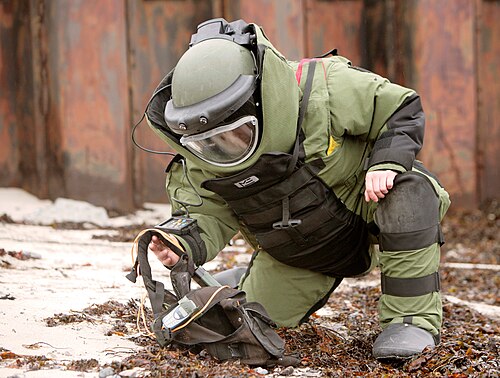
EOD is one of those acronyms that means completely different things depending on who’s saying it. Your boss emails you “get this done by EOD” — and somewhere across the world, a technician in a 75-pound bomb suit is living an entirely different definition of those same three letters. This guide covers every major meaning of EOD, from workplace deadlines to one of the most dangerous military careers in existence.
What Does EOD Stand For?
EOD has three primary meanings used across professional contexts:
- End of Day — a business/workplace deadline term
- Explosive Ordnance Disposal — a military and public safety specialization
- Every Other Day — a medical prescription abbreviation
Each one is widely used, widely misunderstood, and worth knowing. Let’s break them all down.
EOD Meaning in Business: End of Day
In professional settings, EOD stands for “end of day.” It’s used to set a deadline for a task that should be completed by the close of the business day — typically around 5:00 PM in the sender’s local time zone.
You’ll see it in emails constantly: “Can you send over the report by EOD?” or “We need the revised proposal by EOD Friday.” It’s shorthand that keeps communication efficient, but it can create real confusion when the sender and recipient are in different time zones or different countries.
What Time Is EOD, Exactly?
This is where it gets tricky. EOD doesn’t lock to a universal clock. When someone uses EOD without specifying a time zone, it’s generally understood to mean the end of the business day in the sender’s time zone. So if your manager in New York says “get this to me by EOD,” they mean 5:00 PM EST — not 5:00 PM wherever you happen to be sitting.
Most organizations treat EOD as synonymous with 5:00 PM local time. Some flexible workplaces stretch it to 6:00 PM, especially in industries where late-day client calls are common. A handful of global companies define EOD as 11:59 PM, treating it as the literal end of the calendar day. Before you assume, it’s worth asking if you’re not sure.
EOD vs COB: What’s the Difference?
This is one of the most searched business questions around this topic, and rightfully so — the two terms are related but not identical.
COB (Close of Business) is rooted in the financial world. It traditionally refers to the close of the New York Stock Exchange at 4:00 PM EST. When someone says “by COB,” they’re invoking a fixed reference point tied to Eastern Standard Time, regardless of where either party is located. It’s the safer choice when communicating across time zones because it anchors the deadline to a specific, recognizable time.
EOD (End of Day), by contrast, is relative. It refers to the end of the business day in the sender’s time zone — which could be anything from New York to London to Mumbai. This flexibility is useful for internal communications where everyone shares the same working hours. It becomes a problem when external parties or remote teams are involved without a time zone specified.
A useful rule of thumb:
- Use COB when communicating with external clients or partners in different time zones
- Use EOD for internal, same-timezone team communications
- When in doubt, just write the exact time and time zone — “by 5:00 PM EST Friday” eliminates all ambiguity
Related Acronyms in the Same Family
You’ll also run into these terms, all carrying similar meanings:
- EOB (End of Business) — nearly identical to COB, signals the formal close of business operations
- EOP (End of Play) — borrowed from British English, used in finance and government
- COP (Close of Play) — also British in origin, same meaning as EOP
- EOW (End of Week) — less common but used to indicate Friday at close of business
What Are Business Days?
COB and EOD both apply to business days only — not weekends or public holidays. A standard business day runs Monday through Friday, 9:00 AM to 5:00 PM. Saturday and Sunday are not business days in virtually any standard corporate context, even for companies that operate on weekends. Public holidays are similarly excluded.
If you’re assigning a deadline “by EOD Monday” and Monday falls on a public holiday, professional convention is that the deadline shifts to the next working day — though it’s always smarter to confirm explicitly rather than assume.
Best Practices for Using EOD in Professional Communication
Using EOD well is about setting clear expectations, not just dropping a familiar acronym. A few practical tips:
- When emailing someone in a different time zone for the first time, spell it out: “by EOD (5:00 PM EST)”
- For high-stakes or legally significant deadlines, skip the acronym entirely and write out the precise date, time, and time zone
- If a colleague asks what you mean by EOD, don’t treat it as a silly question — take it as a sign to communicate more precisely going forward
- In project management tools, set the actual task due date rather than relying on EOD in a comment thread
EOD Military Meaning: Explosive Ordnance Disposal
In the military context, EOD means something entirely different — and far more dangerous. Explosive Ordnance Disposal is the military specialization responsible for detecting, identifying, evaluating, and safely disposing of explosive devices. This includes conventional bombs, improvised explosive devices (IEDs), landmines, chemical weapons, biological weapons, radiological devices, and nuclear ordnance.
EOD technicians are, quite simply, the people who walk toward the bomb when everyone else runs away.
History of Military EOD
Modern EOD as a formal discipline traces its roots to World War II. During the German Luftwaffe’s bombing campaign over Britain, unexploded bombs buried in the ground posed catastrophic danger to civilian populations. The British formed dedicated bomb disposal squads to address the threat — a model the U.S. subsequently adopted after sending volunteers to train in England.
The U.S. Navy formally established its Mine Disposal School in May 1941 and Bomb Disposal School in January 1942. Over the following decades, EOD evolved through every major conflict — Korea, Vietnam, Desert Storm, Iraq, and Afghanistan — each war introducing new types of explosive threats and demanding more sophisticated counter-measures.
Today, EOD is practiced across all four U.S. military branches, and every one of them trains at the same school.
Where EOD Technicians Train: NAVSCOLEOD
All U.S. military EOD technicians — Army, Navy, Air Force, and Marine Corps — attend the Naval School Explosive Ordnance Disposal (NAVSCOLEOD), located at Eglin Air Force Base in Fort Walton Beach, Florida. The course runs approximately 42 weeks and is considered one of the most technically demanding military schools in the world.
The training covers:
- Air Ordnance Division — bombs, missiles, and aircraft-delivered munitions
- Improvised Explosive Devices (IEDs) — the homemade bombs that defined the conflicts in Iraq and Afghanistan
- Nuclear Ordnance Division — basic nuclear physics, radiation monitoring, and decontamination
- Underwater Ordnance Division — torpedoes, sea mines, and underwater search techniques
Graduates of NAVSCOLEOD receive the EOD Badge — often called “the Crab” — which is the only joint-service occupational badge awarded across all four branches of the U.S. military.
EOD by Branch: Army, Navy, Air Force
Army EOD
Army EOD (Military Occupational Specialty code 89D) operates in support of ground forces, special operations, and civilian authorities. Army EOD units are responsible for handling conventional, improvised, and CBRN (chemical, biological, radiological, and nuclear) explosive threats.
The Army EOD structure includes 3 EOD Groups (Brigade equivalents), 9 Battalions, and 52 Companies operating under U.S. Army Forces Command. Before attending NAVSCOLEOD, Army candidates complete a 7-week preparatory course at Fort Gregg-Adams, Virginia.
Army EOD supports maneuver units in combat, provides emergency response on and off military installations, and works with federal and local law enforcement agencies when explosive threats arise in civilian areas.
Navy EOD
Navy EOD is the most elite of the four EOD communities and the only one classified as special operations. Navy EOD technicians operate across land, sea, and air environments — a distinction that sets them apart even within the broader EOD world.
The Navy EOD training pipeline is the longest and most demanding:
- EOD Preparatory Course (4 weeks) — swim conditioning and mental resilience training at Naval Station Great Lakes, Illinois
- EOD Assessment and Selection Course (4 weeks) — grueling evaluation of physical fitness, water comfort, academic ability, and peer rankings
- Dive School (9 weeks) — Naval Diving and Salvage Training Center, Panama City, Florida
- NAVSCOLEOD (44 weeks) — the joint-service EOD school at Eglin Air Force Base
- Basic Parachute Training (3 weeks) — airborne qualification at Fort Moore, Georgia
- EOD Tactical Training (4 weeks) — helicopter insertion, small arms, small unit tactics, and tactical communications in San Diego
Navy EOD techs deploy alongside Naval Special Warfare units, Carrier Strike Groups, and Marine Expeditionary Units. Approximately 30% of Navy EOD deployments support Special Operations Forces missions. They’re also trained to work with the U.S. Secret Service in protective operations, sweeping venues and routes for explosive threats on behalf of senior government officials.
Air Force EOD
Air Force EOD (career field 3E8X1) follows the same NAVSCOLEOD pipeline as the other branches. Air Force EOD technicians apply classified techniques and special procedures to neutralize unexploded ordnance and protect air installations, aircraft, and personnel. Their missions range from clearing flight lines after mishaps to supporting deployed combat operations.
The EOD Suit (Bomb Suit): What It Is and How It Works
The EOD suit — also called a bomb suit or blast suit — is the heavy protective gear worn by technicians when they physically approach an explosive device. It’s one of the most recognizable symbols of the EOD community and one of the most sophisticated pieces of protective equipment ever developed.
Modern EOD suits weigh roughly 75 to 85 pounds and use multiple layers of Kevlar, foam, and hard plastic plates to protect against two distinct threats:
- Fragmentation — shrapnel from a detonating device traveling at high speed
- Blast wave — the pressure wave generated by an explosion, which can cause fatal internal injuries even without a visible wound. This is called “blast lung” — the lungs and other organs can hemorrhage from blast pressure alone, even if there’s no penetrating injury.
Research conducted in the UK in the mid-1990s revealed that standard Kevlar armor by itself doesn’t protect against blast waves. The solution was layering high acoustic impedance material against a low acoustic impedance backing (like low-density foam), which absorbs and deflects the wave rather than transmitting it to the wearer’s body.
Modern suits also incorporate:
- Cooling systems (built-in fans and sometimes full-body cooling circuits) to prevent heat exhaustion
- Helmets with integrated communication systems
- Visors compatible with self-contained breathing apparatus for CBRN threats
The suit provides significant protection, but it doesn’t make a technician invincible. It’s designed to improve survivability — not guarantee it.
The EOD Badge: “The Crab”
The Explosive Ordnance Disposal Badge is a coveted military decoration awarded to all four branches of the U.S. Armed Forces. Nicknamed “the Crab” for its distinctive design, it’s the only joint-service badge in the Department of Defense — the same badge is issued to Army, Navy, Air Force, and Marine Corps EOD technicians.
The badge comes in three levels:
- Basic EOD Badge — awarded after completing NAVSCOLEOD and approximately 18–24 months of operational experience
- Senior EOD Badge — awarded after 3–5 years as an EOD specialist
- Master EOD Badge — awarded after 7–15 years of service, typically in a senior supervisory position
The design carries symbolic meaning. The central bomb represents the primary historical objective of EOD work. The three fins on the bomb represent the three main areas of EOD focus: nuclear, conventional, and chemical/biological ordnance. The lightning bolts symbolize the destructive power of explosives and the courage of those who neutralize them. The shield represents the EOD mission of protection.
EOD Medical Abbreviation: Every Other Day
In medicine and pharmacy, EOD stands for “every other day.” You’ll see it on prescription labels and in clinical instructions when a medication or treatment should be administered on alternating days rather than daily. For example, a physician might prescribe a corticosteroid “EOD” to reduce side effects while maintaining therapeutic effectiveness.
If you ever see EOD on a prescription bottle, it means:
- Take the medication on Day 1, skip Day 2, take on Day 3, skip Day 4 — and so on
- It does NOT mean “end of day” in this context
Always clarify with your pharmacist if you’re unsure which meaning applies to your prescription.
EOD Acronym: Summary of All Key Meanings
| Acronym | Full Form | Context |
| EOD | End of Day | Business/workplace deadlines |
| EOD | Explosive Ordnance Disposal | Military and law enforcement |
| EOD | Every Other Day | Medical prescriptions |
| COB | Close of Business | Business deadlines (EST-anchored) |
| EOB | End of Business | Business deadlines (interchangeable with COB) |
| EOP | End of Play | Business deadlines (British origin) |
Frequently Asked Questions About EOD
What does EOD mean in a text or email from my boss?
It means “end of day” — your boss wants the task completed by the close of the business day, typically 5:00 PM. If no time zone is specified, assume they mean their own time zone.
What does EOD stand for in the military?
EOD in the military stands for Explosive Ordnance Disposal. It refers to the specialized units and technicians responsible for detecting, disarming, and disposing of explosive devices, including bombs, IEDs, landmines, and chemical weapons.
What is the difference between EOD and COB?
EOD (End of Day) is relative to the sender’s time zone, while COB (Close of Business) is anchored to 5:00 PM Eastern Standard Time in the U.S. COB is better for cross-timezone communications; EOD is common for internal team deadlines.
How long is EOD training in the military?
The core EOD school at NAVSCOLEOD in Eglin Air Force Base is approximately 42 weeks. Navy EOD technicians go through a longer pipeline — including dive school and additional tactical training — that totals well over a year from start to finish.
What does EOD stand for in medical terms?
In medicine, EOD means “every other day.” It’s commonly used on prescriptions to indicate a medication should be taken every other day rather than daily.
How heavy is an EOD bomb suit?
A modern EOD suit typically weighs between 75 and 85 pounds. It includes multiple layers of Kevlar, foam, and hard plate materials designed to protect against both fragmentation and blast pressure waves.
What is the EOD badge called?
The EOD badge is commonly called “the Crab” by those who’ve earned it. It’s the only joint-service occupational badge in the U.S. Department of Defense, worn by Army, Navy, Air Force, and Marine Corps EOD technicians.
Is Navy EOD special operations?
Yes. Navy EOD falls under Naval Special Operations, which is under the Navy Expeditionary Combat Command. This distinguishes it from Army, Air Force, and Marine Corps EOD communities, which are not classified as special operations.
What does an EOD technician actually do day-to-day?
Day-to-day duties vary by assignment, but typically include responding to explosive hazard calls, training with robotic systems, maintaining equipment, conducting underwater ordnance searches (Navy), demolishing outdated or recovered munitions, and supporting law enforcement or special operations units.
Is EOD the same as a bomb squad?
Functionally, yes — EOD is the military equivalent of a civilian bomb squad. The terms are often used interchangeably, though EOD technically encompasses a broader scope of ordnance types, including military-grade weapons, nuclear devices, and chemical/biological munitions.
What does “by EOD” mean in project management?
In project management, “by EOD” is used to set daily deadlines for tasks or deliverables. It means the item should be completed by the end of the business day on the specified date. Project managers often include a time zone when using EOD with distributed teams.
Can EOD mean something different at 11:59 PM?
In some contexts — particularly in financial markets in the UK — EOD refers to 23:59 (11:59 PM). In standard U.S. business usage, EOD is typically 5:00 PM. The exact interpretation depends on industry, company policy, and geography.
What happens after you complete EOD training in the military?
After completing training, EOD technicians are assigned to operational units — Mobile Units in the Navy, Companies in the Army, and squadrons in the Air Force. From there, they deploy globally, gaining real-world experience and often pursuing additional specialized schools in areas like free-fall parachuting, combat medicine, or advanced IED defeat techniques.
Is EOD dangerous?
It’s among the most hazardous occupations in the world. EOD technicians routinely work with live explosives in unpredictable conditions. No amount of training, protective equipment, or robotic assistance eliminates all risk. The job requires extreme technical precision, stress tolerance, and physical endurance.
What’s the civilian equivalent of military EOD?
Civilian bomb disposal is typically handled by Public Safety Bomb Technicians (PSBTs), who are usually members of police departments or fire agencies. They must attend the FBI Hazardous Devices School at Redstone Arsenal, Alabama to become certified. Many military EOD veterans transition into civilian bomb squad roles after service.